You may know how to raise concerns about your dental treatment in the UK, but are you familiar with the process in a foreign country? To help you make an informed decision about your dental care, we have produced a guide on travelling abroad for dental treatment in association with the British Dental Health Foundation, the UK’s leading oral health charity.
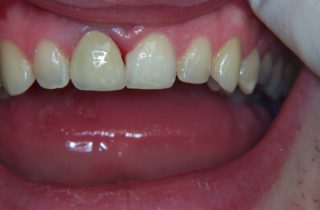
Dental hygienists and dental therapists can carry out tooth whitening on the prescription of a dentist if they have the necessary additional skills, says the GDC.
This clarification from the GDC follows its public consultation on the scope of practice of the dental team earlier this year. The consultation sought views on which groups of professionals should be able to do what, including tooth whitening.
“This explanation should provide clarity to registrants who advised us that they wanted clearer guidance on which members of the dental team could carry out tooth whitening,” GDC President Hew Mathewson says.
“This clarification, however, does not alter the GDC’s position that tooth whitening carried out by non dental professionals is illegal,” he says.
The GDC also decided that taking impressions to a dentist’s prescription and making bleaching trays to a dentist’s prescription are within the scope of additional skills for dental nurses.
Although obstetricians generally consider dental care safe for pregnant women, supporting clinical trial evidence has been lacking. To address this issue, researchers compared safety outcomes from the Obstetrics and Periodontal Therapy Trial in which pregnant women received scaling and root planing (deep cleaning) and essential dental treatment (defined as treatment of moderate-to-severe cavities or fractured or abscessed teeth).The researchers randomly assigned 823 pregnant women with periodontitis to receive scaling and root planing, either at 13 to 21 weeks’ gestation or up to three months after delivery. (Experts recommend that pregnant women defer elective care before eight weeks’ gestation and during late pregnancy.) The researchers determined that 483 of these women also needed essential dental treatment. Three hundred fifty-one of the women completed all recommended treatment.
Throughout the trial, obstetric nurses reviewed medical records to monitor subjects for serious adverse events. The authors defined these events as pregnancies that ended in a nonlive birth and other adverse events that did not result in pregnancy termination (including hospitalizations for more than 24 hours because of labor pains, hospitalizations for any other reason, fetal or congenital anomalies and neonatal deaths).
The results of the study showed that “periodontal treatment and essential dental treatment, administered at a time between 13 and 21 weeks’ gestation, did not significantly increase the risk of any adverse outcome evaluated,” the authors write. “Use of topical and local anesthetics for scaling and root planing also was not associated with an increased risk of experiencing these adverse events and outcomes.”
The research team was led by Dr. Bryan Michalowicz, professor of periodontics, University of Minnesota School of Dentistry, Minneapolis